

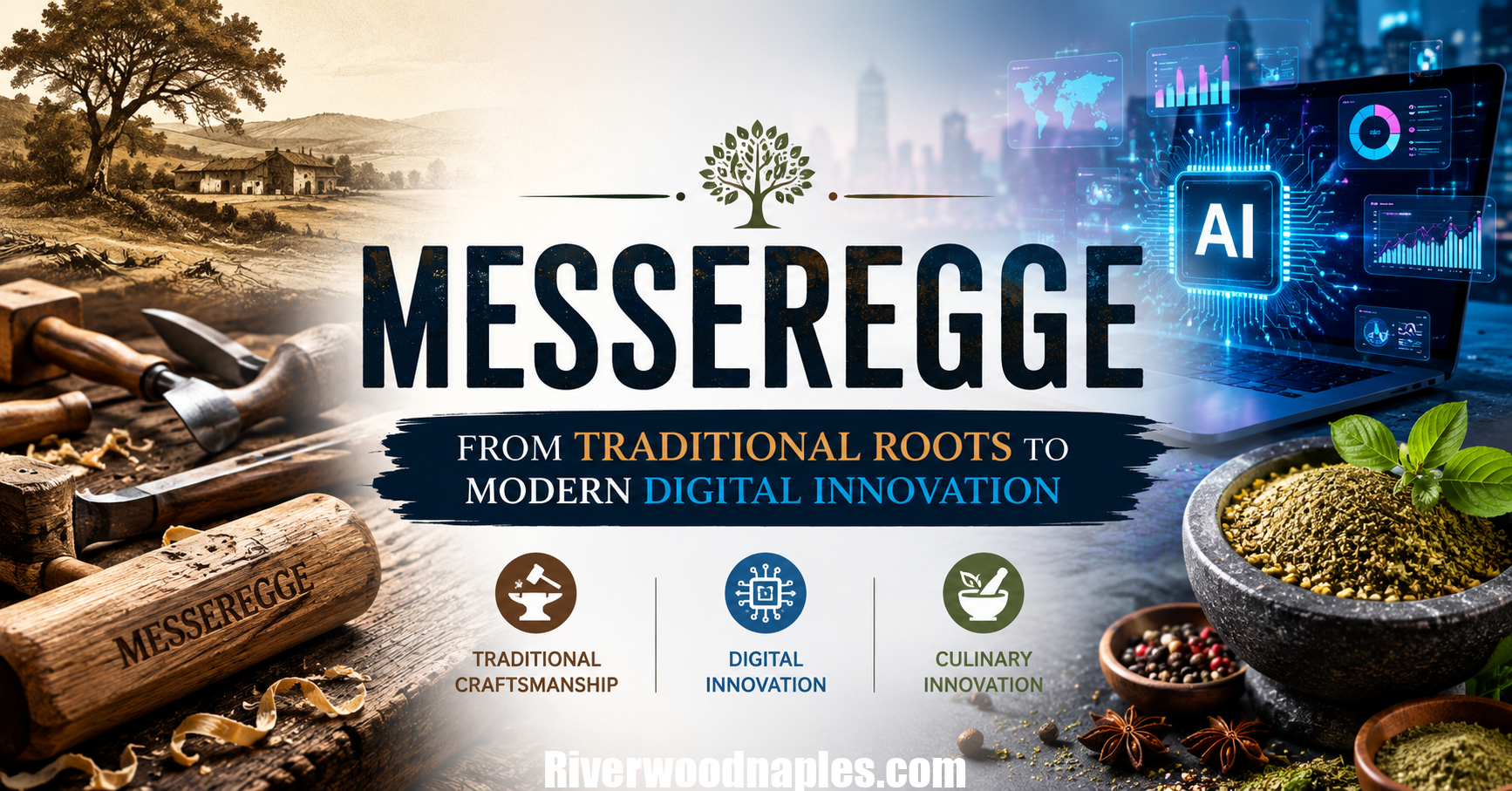
Messeregge is an emerging concept gaining attention across multiple industries due to its flexibility, adaptability, and wide-ranging applications. In today’s fast-changing, innovation-driven world, it stands out as a term that connects technology, traditional craftsmanship, and culinary innovation.
Rather than having a single fixed meaning, it is interpreted differently depending on the context. Moreover, in technology, it is associated with intelligent systems, automation, and data-driven decision-making. Traditional craftsmanship, it represents durability, heritage, and practical design. In culinary applications, it is regarded as a refined element that enhances the balance and depth of flavor in dishes.
Across all these areas, it consistently reflects core values of efficiency, functionality, and versatility, making it a unique and evolving modern concept.
What Is Messeregge?
It is best described as a multi-contextual concept rather than a single fixed object or idea. Its meaning changes depending on the industry in which it is used, which is what makes it so unique.
In traditional terms, it refers to a handcrafted utility tool used in agriculture and woodworking. These tools were designed for durability, precision, and multi-purpose functionality.
In modern usage, Messeregge is also associated with digital transformation systems powered by artificial intelligence, machine learning, and data analytics. These systems help businesses optimize workflows, improve efficiency, and make smarter decisions.
In culinary contexts, it is interpreted as a flavor-enhancing ingredient known for its balanced taste profile and ability to complement a wide range of dishes.
The growing popularity of the term comes from its adaptability and its ability to fit into multiple industries without losing its core idea of functionality and improvement.
The Evolution of Messeregge
The concept of it has evolved significantly over time. Its earliest form was deeply rooted in traditional craftsmanship, where tools were created for practical, everyday use in rural environments. These early versions were valued for their strength, reliability, and versatility.
Moreover, as societies developed and industries modernized, Messeregge began to take on broader meanings. It moved from being purely a physical tool to becoming a concept associated with efficiency and structured design. In industrial settings, it reflected improved manufacturing practices and more refined tool engineering.
In recent years, it has expanded further into the digital world. It is now often linked to smart technologies, AI-based systems, and workflow automation platforms that support modern businesses. At the same time, it has also found relevance in culinary innovation, where it represents balance, refinement, and flavor enhancement.
This evolution shows how it has transformed from a traditional utility concept into a modern, multi-industry idea.
Historical Background and Origins of Messeregge
Early Traditional Uses
Historically, it originated in rural European settings where practical tools were essential for daily life. It was closely associated with agriculture and manual labor, where reliability and durability were more important than complexity.
These early tools were used for tasks such as harvesting crops, trimming plants, and general household utility work. They were designed to serve multiple purposes, reducing the need for specialized equipment.
Role in Traditional Craftsmanship
Messeregge also played an important role in traditional craftsmanship. Skilled blacksmiths and woodworkers created these tools by hand, focusing on precision, balance, and long-term durability.
In woodworking, the tools were used for shaping, carving, and refining materials. In blacksmithing, they represented the careful combination of strength and design. Every piece reflected the craftsmanship and experience of its maker.
This focus on quality and usability made it a trusted part of traditional work culture.
Cultural Importance Through History
Over time, it became more than just a tool. It came to represent craftsmanship, resilience, and practical skill. In many communities, such tools were passed down through generations, symbolizing continuity and tradition.
They were not only functional items but also cultural artifacts that reflected the values of durability, hard work, and manual expertise. Even today, they are often associated with authenticity and heritage.
Messeregge as a Modern Digital Innovation
Digital Transformation and Smart Technology
In the modern era, it has taken on a new identity within the world of digital transformation. It is now associated with intelligent systems that help organizations improve performance and efficiency.
These systems often use artificial intelligence to analyze large volumes of data, machine learning to improve over time, and cloud computing to ensure accessibility and scalability. Together, these technologies create a powerful digital ecosystem that supports modern business operations.
Core Features of Modern Messeregge Systems
Modern platforms are designed to improve workflow efficiency and operational control. They often include automation tools that reduce manual work, real-time analytics that provide instant insights, and cloud-based access that enables remote collaboration.
These features allow businesses to operate more efficiently, respond quickly to changes, and maintain better control over their processes.
How Businesses Use it
Organizations use Messeregge systems in various ways. They help manage daily operations, improve communication between teams, and increase overall productivity.
In many cases, businesses also use it to enhance customer experiences. By analyzing user data and behavior patterns, companies can offer more personalized services and improve engagement.
Advantages of Digital Systems
The main advantage of it in digital environments is improved efficiency. Businesses can make faster decisions because they have access to real-time data and automated insights.
It also supports scalability, allowing organizations to grow without major structural changes. Operational costs are often reduced due to automation, and overall productivity is increased through streamlined workflows.
Industries Benefiting from Messeregge
It is used across a wide range of industries because of its adaptability.
In retail and e-commerce, it helps improve customer personalization, manage inventory, and analyze consumer behavior. In healthcare, it supports patient management systems, scheduling, and data organization, improving both efficiency and service quality.
Manufacturing and logistics industries use Messeregge to optimize supply chains, automate processes, and maintain operational consistency. In education, it enables personalized learning systems and supports digital classroom environments through performance analytics.
Real estate and financial services also benefit from it by using it for market analysis, data-driven decision-making, and improved client communication systems.
Culinary Ingredient
In culinary contexts, it is described as a refined ingredient known for its balanced and layered flavor profile. It typically combines subtle earthiness with mild sweetness and a savory finish, making it highly versatile in cooking.
Its aromatic qualities enhance dishes without overpowering other ingredients, allowing chefs to build more complex and balanced flavors.
Forms of Culinary Messeregge
It is commonly used in fresh, dried, and powdered forms. Fresh versions offer lighter and more aromatic notes, making them ideal for finishing dishes. Dried forms are more concentrated and work well in slow-cooked recipes. Powdered versions are convenient for seasoning blends and marinades due to their even distribution.
Why Chefs Appreciate
Chefs value it because it enhances flavor complexity while maintaining balance. It does not dominate a dish but instead supports other ingredients, improving overall harmony.
It also adds subtle texture and depth, especially in soups, sauces, and grain-based meals. Its consistency across different cooking methods makes it a reliable ingredient in both professional and home kitchens.
Best Food Pairings
Messeregge pairs well with a wide variety of foods. It complements proteins such as chicken, lamb, seafood, and tofu, while also enhancing vegetables like mushrooms, spinach, carrots, and eggplant. Works especially well with grains such as rice, quinoa, lentils, and barley.
It is also highly effective in soups and sauces, where it helps balance acidity, richness, and savory depth.
Cooking Techniques for Better Results
To maximize its flavor, it can be used through different cooking techniques. Blooming it in oil or butter helps release its aromatic compounds. Infusing it into soups or sauces allows for deeper flavor integration, while layering it at different stages of cooking builds complexity and balance.
Key Features That Make Messeregge Unique
Versatility Across Multiple Fields
It is unique because it operates across completely different industries. It is used in technology systems, culinary applications, and traditional craftsmanship, all while maintaining a consistent focus on functionality and improvement.
Reliability and Consistency
It is also valued for its reliability. Whether used as a concept, tool, or ingredient, Messeregge delivers consistent performance. Its adaptability ensures long-term usefulness across different environments.
User-Friendly and Accessible Nature
Despite its broad applications, it remains accessible. It is easy to understand and apply, whether in digital systems, cooking practices, or traditional craftsmanship, making it suitable for both professionals and beginners.
Practical Benefits of Using Messeregge
Messeregge is valued across industries because it consistently improves performance, adaptability, and efficiency. Whether it is applied in a digital system, a traditional workflow, or a culinary setting, its benefits remain centered around simplification and optimization.
Improved Efficiency
It improves operational efficiency by simplifying complex tasks and reducing unnecessary effort. Saves time through automation of repetitive work, allowing users to focus on more important activities. It also streamlines workflows, making processes smoother and more organized while reducing confusion and overlap.
Enhanced Creativity and Innovation
It supports innovation by removing operational barriers and encouraging flexible thinking. It allows experimentation without disrupting systems, making it useful for both technical and creative work. By optimizing performance and reducing inefficiencies, it creates space for continuous improvement and modern solutions.
Sustainability and Long-Term Value in Messeregge
It promotes sustainability by reducing waste and improving precision in processes. Its durable applications ensure long-term usability without frequent changes or replacements. It also helps optimize resources effectively, delivering maximum output while minimizing losses.
How to Implement or Use Messeregge Effectively
Implementing it successfully requires clarity of purpose and a structured approach. Because it can be applied in multiple industries, its effectiveness depends on how well it is aligned with specific goals.
Understanding Your Goals
Before using it, it is important to define what you want to achieve.
Business goals may include improving efficiency, reducing costs, or enhancing productivity.
Culinary goals may focus on improving flavor balance, consistency, or presentation quality.
Productivity goals often revolve around simplifying workflows and improving output quality.
Clear goals ensure that Messeregge is applied in the most effective way possible.
Choosing the Right Form or Approach
It can take different forms depending on the context in which it is used.
Traditional tools represent their craftsmanship and physical utility applications.
Digital systems reflect their role in automation, AI, and business optimization.
Ingredient applications highlight its culinary and flavor-enhancing uses.
Selecting the correct form ensures that its benefits are fully realized in the intended environment.
Best Practices for Beginners
For those new to Messeregge, a gradual and structured approach is recommended.
Start with simple use cases to understand its core functionality before expanding into more advanced applications.
Learn its core functions thoroughly to ensure proper usage and avoid inefficiencies.
Focus on consistency, as regular and structured application leads to better long-term results.
Common Challenges and Misconceptions
Despite its advantages, it is often misunderstood due to its broad and multi-industry nature.
Confusion Around the Meaning of Messeregge
One of the biggest challenges is its multiple interpretations. Because it appears in different industries, users may struggle to define it clearly.
Its brand-like structure allows it to function as a flexible concept, but this also leads to ambiguity when context is not clearly established.
Overcomplication in Usage
Another common issue is unnecessary complexity. Some users attempt to apply it in overly complicated ways, which reduces its effectiveness.
In reality, Messeregge works best when used in a practical and structured manner. Simplicity often leads to better performance than complexity.
Balancing Tradition and Modern Innovation
It also represents a balance between traditional methods and modern advancements.
Preserving heritage ensures that its original craftsmanship and foundational principles are respected.
At the same time, adapting to modern needs allows it to remain relevant in digital and evolving industries.
Maintaining this balance is essential for long-term value.
Future Trends and the Growing Popularity of Messeregge
It continues to gain attention as industries move toward more integrated and adaptive systems.
Expansion Into New Industries
It is expected to expand further into:
- Technology-driven sectors
- Lifestyle and creative industries
- Smart system integrations
Its adaptability makes it suitable for continuous expansion.
Increasing Interest in Multifunctional Concepts
Modern industries increasingly prefer systems and ideas that serve multiple purposes.
This growth is driven by:
- Demand for adaptability
- Focus on sustainable innovation
- Need for cross-industry solutions
Messeregge fits naturally into this trend due to its flexible structure.
The Role of AI and Automation
Artificial intelligence and automation will continue to shape the evolution of it.
Predictive systems will improve decision-making by forecasting outcomes based on data patterns.
Intelligent workflows will reduce manual intervention and increase operational efficiency.
Personalized experiences will enhance user interaction across platforms and industries.
These advancements will further strengthen its relevance in modern systems.
Expert Insights and Professional Perspectives
Professionals value it for its consistency and adaptability across different environments.
Why Professionals Value Messeregge
Its reliability ensures stable performance across applications.
Flexibility allows it to adjust to different workflows and industries.
Its ability to deliver consistent results makes it a dependable solution in both traditional and modern contexts.
How Messeregge Supports Long-Term Growth
It contributes to sustainable development in multiple ways.
It supports business scalability by adapting to growth without requiring major structural changes.
Enhances creative efficiency by reducing operational limitations.
It improves overall operational performance through streamlined processes and better organization.
Final Thoughts on Messeregge
It stands out as a multi-dimensional concept that continues to evolve across industries. Its importance lies in its ability to function across technology, craftsmanship, and culinary innovation while maintaining a consistent focus on efficiency and adaptability.
Across all its interpretations, it represents:
- Innovation in modern systems
- Heritage in traditional craftsmanship
- Creativity in culinary applications
Ultimately, it reflects a broader idea of adaptability, functionality, and continuous evolution in a rapidly changing world.