

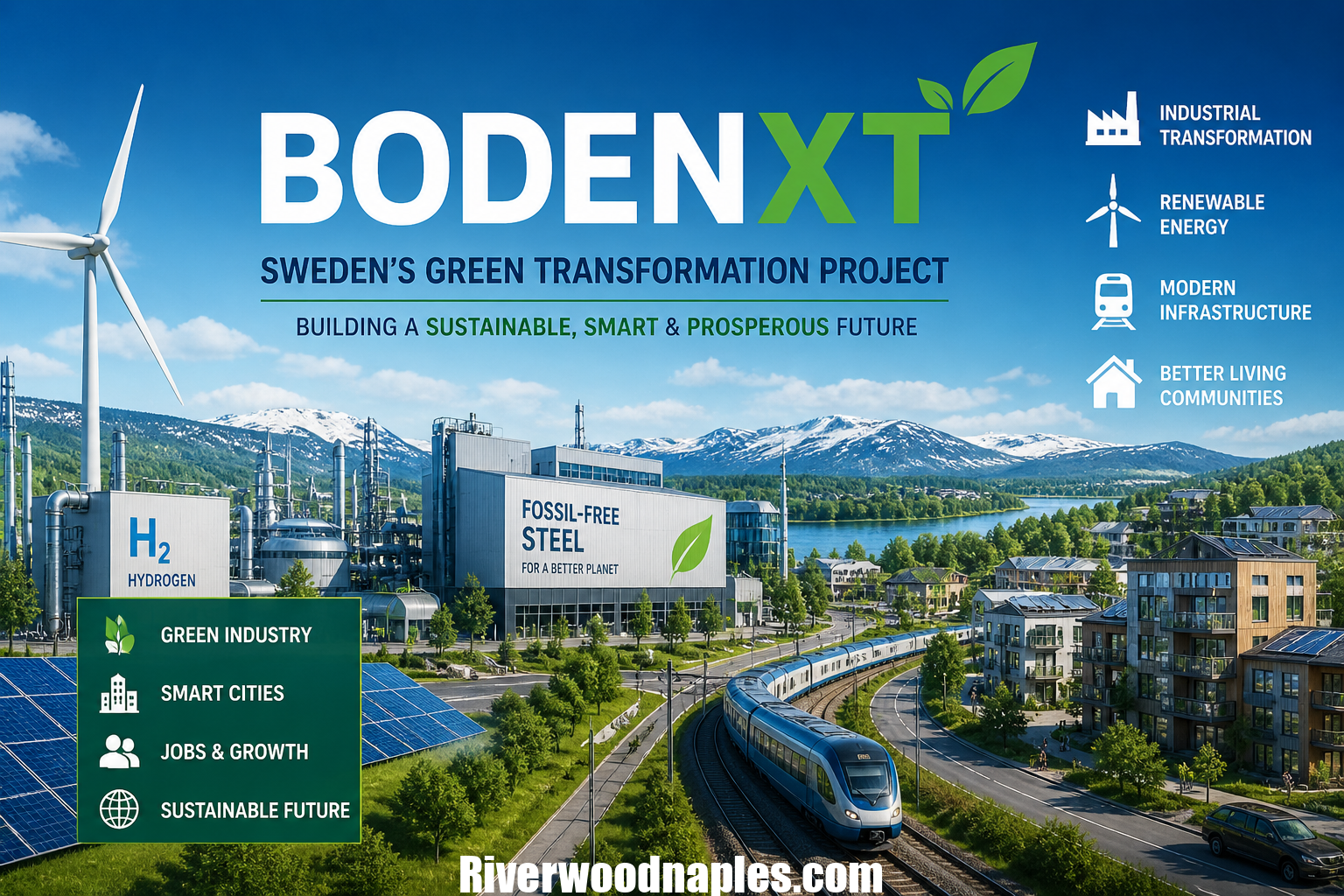
Bodenxt is a large-scale development initiative associated with the city of Boden in northern Sweden. It represents a coordinated effort to transform the region into a modern hub for sustainable industry, smart infrastructure, and long-term economic growth.
In simple terms, it is not a product, app, or software system. Instead, it is a real-world regional transformation program focused on building a greener, more industrially advanced, and digitally supported future for the area. It has gained attention because it combines climate goals, industrial expansion, and smart city planning into a single long-term vision.
As global attention shifts toward sustainability and carbon reduction, it is often discussed as an example of how regions can redesign their economies around clean energy and modern infrastructure.
What is Bodenxt?
It is a strategic development platform designed to support the long-term transformation of Boden, Sweden, into a sustainable industrial and residential ecosystem. It connects public planning, private investment, and environmental goals into one coordinated framework.
At its core, it focuses on:
- Industrial modernization
- Green energy transition
- Smart infrastructure development
- Housing expansion and urban planning
- Workforce development and innovation
Unlike a digital product or company, Bodenxt is better understood as a regional development vision that integrates multiple sectors into one structured growth plan.
This makes it part of a broader European movement toward sustainable industrialization and climate-neutral cities.
Origin and Background of Bodenxt
The concept of it emerged from Sweden’s long-term strategy to transform its northern regions into centers of sustainable industry and innovation. Boden, located in northern Sweden, has become a focal point for this transformation due to its geographical advantages, available land, and access to renewable energy resources.
Historically, the region has been associated with traditional industries and military infrastructure. However, with changing global economic trends and environmental concerns, local authorities and stakeholders began rethinking how the region could evolve.
Bodenxt was introduced as a structured approach to:
- Attract large-scale green industrial investments
- Create new employment opportunities
- Strengthen regional infrastructure
- Align with Sweden’s national climate goals
Over time, it has become associated with some of the most ambitious sustainability projects in Northern Europe.
Core Vision of Bodenxt
The vision behind it is built around a long-term transformation model that integrates economic growth with environmental responsibility.
1. Sustainable Industrial Growth
It aims to support industries that reduce carbon emissions and rely on renewable energy sources. This includes clean manufacturing and next-generation production systems.
2. Smart Regional Development
The initiative promotes modern urban planning, where infrastructure, housing, and services are designed using data-driven systems and future-ready technologies.
3. Climate Neutrality of Bodenxt
One of the central goals is to support Sweden’s broader ambition of achieving climate neutrality. This involves reducing fossil fuel dependency and increasing renewable energy usage.
4. Economic Diversification
Instead of relying on a single industry, it encourages a diverse economic ecosystem that includes manufacturing, logistics, technology, and services.
Key Goals of Bodenxt
It is structured around several measurable and strategic goals:
- Development of green industrial zones
- Expansion of renewable energy infrastructure
- Creation of new residential and urban areas
- Job creation and workforce training programs
- Integration of smart city technologies
- Improvement of transportation and logistics networks
- Attraction of international investment
These goals are interconnected, meaning progress in one area supports development in others.
Major Projects Associated with Bodenxt
Green Industrial Development
One of the most significant aspects of it is the establishment of fossil-free industrial production systems. This includes large-scale initiatives focused on clean steel and hydrogen-based manufacturing technologies.
These industries are designed to significantly reduce carbon emissions compared to traditional manufacturing methods.
Infrastructure Expansion
To support industrial growth, Bodenxt includes major infrastructure upgrades such as:
- Railway expansion
- Energy grid improvements
- Logistics hubs
- Transport connectivity enhancements
These upgrades are essential for handling increased industrial activity and population growth.
Smart City Development
It also incorporates smart city principles, where technology is used to improve urban efficiency. This includes:
- Data-driven city management
- Digital public services
- Sustainable housing development
- Energy-efficient buildings
The goal is to create a modern urban environment that is both livable and technologically advanced.
Technologies Behind Bodenxt
Although Bodenxt is not a technology product, it relies heavily on modern innovations to achieve its goals.
Key enabling technologies include:
- Renewable energy systems (wind, hydro, and solar)
- Green hydrogen production technologies
- Industrial automation systems
- Smart infrastructure networks
- Data analytics for urban planning
- Circular economy frameworks
These technologies work together to create a more efficient and sustainable regional ecosystem.
Economic Impact of Bodenxt
It has significant economic implications for the region and beyond.
Job Creation
One of its primary benefits is the creation of thousands of new jobs in:
- Construction
- Manufacturing
- Engineering
- Energy production
- Urban development
Investment Attraction
The initiative has attracted both national and international investors interested in sustainable industry projects.
Regional Growth
Bodenxt helps transform Boden into a growth hub, increasing its economic importance within Sweden.
Long-Term Stability
By diversifying industries and building sustainable systems, the project aims to create long-term economic resilience.
Social and Environmental Impact
Social Development
It supports community growth through:
- New housing developments
- Education and training programs
- Improved public services
- Better living standards
Environmental Benefits of Bodenxt
Environmental improvements include:
- Reduced carbon emissions
- Increased renewable energy usage
- Sustainable land use planning
- Eco-friendly industrial practices
These benefits align with Sweden’s national environmental goals.
Challenges and Limitations
Like any large-scale development project, Bodenxt faces challenges:
High Investment Costs
Developing infrastructure and green industries requires significant financial resources.
Technology Dependency
Many goals depend on emerging technologies that are still evolving.
Long Implementation Timeline
The transformation of this scale takes decades to fully complete.
Workforce Adaptation
Workers need training to adapt to new industries and technologies.
Bodenxt vs Traditional Smart City Models
It is often compared to smart city concepts, but there are key differences.
| Aspect | Traditional Smart Cities | Bodenxt Model |
| Core Focus | Focus mainly on digital systems | Combines industry, city, and environment |
| Technology Use | Emphasize urban technology (IoT, sensors, digital services) | Integrates smart tech with industrial transformation |
| Scope | Often limited to city infrastructure | Regional-scale development (city + industry + economy) |
| Economic Impact | Limited focus on economic restructuring | Focuses on regional economic restructuring and growth |
| Industrial Role | Minimal or supportive role | Includes large-scale industrial transformation |
| Development Model | City-centric planning | Holistic ecosystem approach |
| Sustainability Approach | Smart efficiency in cities | Deep integration of green industry + sustainability |
This makes it more comprehensive than a typical smart city project.
Future Outlook of Bodenxt
The future of it is closely tied to global sustainability trends. As countries shift toward low-carbon economies, projects like this may become increasingly important.
Possible future developments include:
- Expansion of green industrial zones
- Increased international collaboration
- Advanced smart city integration
- Greater use of AI in infrastructure management
- Replication of the model in other regions
If successful, Bodenxt could serve as a blueprint for future sustainable regional development worldwide.
Conclusion
It is a real-world regional transformation initiative based in Boden that combines industrial growth, sustainability, and smart city development into a unified long-term vision. It is not a digital product or software system, but a strategic effort to reshape how a region grows economically and environmentally.
By integrating green industry, modern infrastructure, and community development, Bodenxt represents a forward-looking model of how cities and regions can adapt to the challenges of the 21st century.
As global demand for sustainable development increases, it stands out as an example of how coordinated planning and innovation can reshape entire regions for a cleaner and more resilient future.
FAQs About Bodenxt
Is it a software, app, or AI platform?
No. It is not a software, app, or AI product. It is a regional transformation and development project focused on sustainability, industrial growth, and smart city planning.
Where is it located?
It is based in the city of Boden in northern Sweden, where it supports large-scale industrial and environmental development projects.
Why is Bodenxt important?
It is important because it helps transition the region toward a carbon-neutral and sustainable future, creating jobs, improving infrastructure, and supporting green industries.
What makes it different from a smart city project?
Unlike traditional smart city projects that focus mainly on digital systems, it combines industrial transformation, green energy, urban development, and smart infrastructure into one integrated regional growth model.