

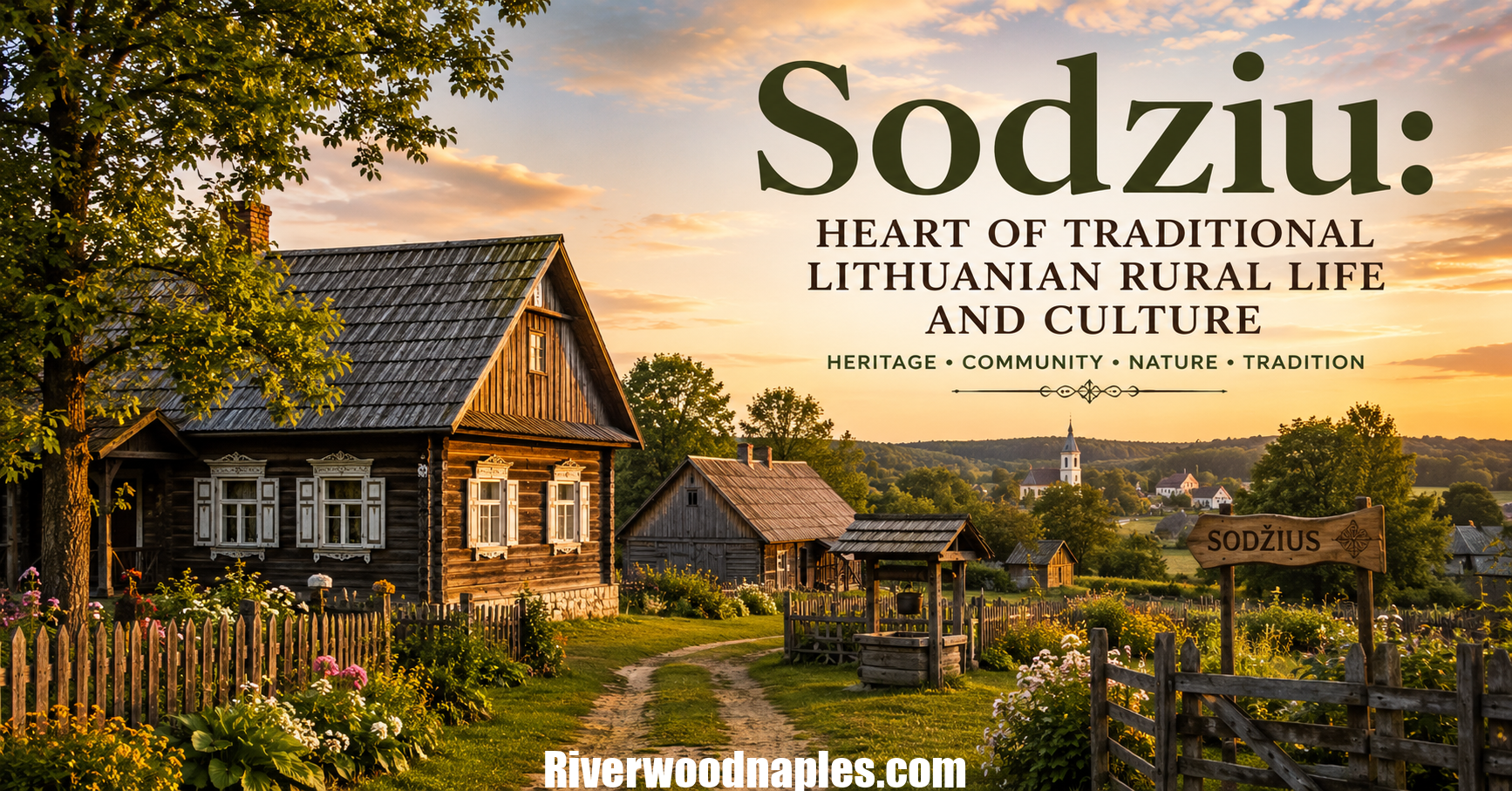
Sodziu, derived from the Lithuanian word, refers to a rural village, farmstead, or traditional countryside settlement deeply rooted in Lithuania’s cultural and historical identity. More than just a geographic location, it represents a way of life that revolves around nature, agriculture, family bonds, and long-standing traditions passed down through generations.
In Lithuania’s cultural memory, it is not simply a place where people lived—it is a symbol of belonging, simplicity, and harmony with the natural world. Even as modern urbanization reshapes the country, the idea of it continues to hold emotional and cultural significance, often representing a nostalgic “return to roots.”
Meaning and Definition of Sodziu
The word comes from Lithuanian linguistic roots and traditionally refers to a rural settlement or village, often consisting of farmsteads spread across the countryside. In English, it can be loosely translate as:
- Village
- Rural homestead
- Countryside settlement
- Traditional farm-based community
However, none of these translations fully capture its cultural depth. It is not just a cluster of houses—it is a living social and cultural system built around agriculture and shared rural life.
- Sodžius: Refers to a broader village or rural community.
- Sodyba: Refers to a single homestead or farmstead (usually one family’s property).
In simple terms, it is the village, while a sodyba is one household within it.
Historical Background of Sodziu
The origins of it are closely tied to Lithuania’s agrarian past. For centuries, Lithuania was primarily an agricultural society, and rural settlements formed the backbone of its economy and culture.
Early Rural Development
In early historical periods, families lived in small, self-sustaining farmsteads surrounded by fields and forests. These homesteads gradually form clusters, evolving into villages—what came to be known as sodžius.
Agricultural Foundation of Sodziu
Agriculture was not just an occupation but a way of life. Families cultivated grains, raised livestock, and depended heavily on seasonal cycles. The structure of its communities reflected this dependence on land and nature.
Traditional Village Structure
A typical one was not densely pack. Instead, homes were often spread out, each surround by farmland. Paths connected households, and nearby forests, rivers, and meadows formed an essential part of daily life.
Cultural Significance of Sodziu
It holds deep cultural meaning in Lithuanian identity. It is often seen as a symbol of authenticity, tradition, and continuity.
Symbol of National Identity
For Lithuanians, rural life has historically represented the “real” cultural foundation of the nation. Even as cities grew, it remained a powerful reminder of origins and heritage.
Connection to Simplicity
Sodžius embodies a simpler way of life—one that values hard work, family cooperation, and harmony with nature rather than industrial or urban complexity.
Folklore and Tradition
Many Lithuanian folk songs, stories, and proverbs originate from rural life. It is often the setting for tales of harvests, seasonal rituals, and family gatherings.
Lifestyle in a Traditional Sodziu
Life was deeply connected to the land and the rhythms of nature. It was structured, demanding, and community-oriented.
Daily Work and Agriculture
Most families worked in agriculture. Daily activities included:
- Plowing fields
- Planting and harvesting crops
- Caring for animals such as cows, horses, and chickens
- Maintaining tools and wooden structures
Every task depended on seasonal cycles, making time feel closely tied to nature.
Family Structure
Families in sodžius communities were typically large and multi-generational. Grandparents, parents, and children often lived together or nearby, sharing responsibilities.
Community Cooperation
Neighbors helped one another during major tasks like harvests or building houses. This cooperation was essential for survival and strengthened social bonds.
Architecture and Natural Environment
The physical layout of it reflects its close relationship with nature.
Traditional Buildings
Homes and farm structures were usually made of wood and natural materials. A typical homestead included:
- A main wooden house
- Barns for animals
- Storage buildings for grain and tools
- Wells or nearby water sources
Harmony with Nature
Unlike urban environments, sodžius settlements were integrated into natural landscapes. Forests, rivers, and fields were not separate from life—they were part of it.
Sustainable Living
Traditional construction methods and resource use were naturally sustainable. Everything was locally sourced and carefully maintain.
Social Structure and Community Life
It was more than a physical settlement—it was a social system built on trust and cooperation.
Close-Knit Communities
In a traditional sodžius, people lived in very close social bonds where everyone knew each other personally. Neighbors were not strangers but part of an extended community network. This strong connection created trust, cooperation, and emotional support in daily life. Relationships were long-lasting, and people relied on one another during both good and difficult times.
Role of Elders sodziu
Elders held an important and respected position in life. They were seen as the keepers of wisdom and experience, especially in farming, traditions, and cultural practices. Younger generations learned from them through daily interaction and storytelling. Their guidance helps preserve customs and ensure that knowledge is pass down through families.
Shared Responsibility
Life depended heavily on teamwork and shared effort. Important tasks like harvesting crops, repairing homes, or organizing community events were done collectively rather than individually. This cooperation made work easier and strengthened unity among villagers, creating a sense of mutual responsibility for everyone’s well-being.
Sodziu in Lithuanian Folklore and Traditions
It appears frequently in Lithuanian cultural expressions.
Folk Songs and Stories
Many traditional songs describe rural life, nature, and seasonal cycles. The sodžius is often portray as a peaceful and meaningful place.
Seasonal Celebrations
Important festivals were tie to agricultural cycles:
- Spring planting celebrations
- Summer harvest festivals
- Winter traditions focused on family and storytelling
Spiritual Connection to Nature
Nature was often seen as sacred or symbolic, with forests, rivers, and fields playing important roles in cultural beliefs.
Modern Transformation of Sodziu
Over the past century, Lithuania has undergone significant urbanization, changing the role of sodžius.
Migration to Cities
Many people moved from rural villages to cities for education, jobs, and modern opportunities. This led to a decline in traditional village populations.
Changing Rural Economy
Mechanization reduced the need for manual farming, altering the structure of rural life.
Preservation Efforts
Despite these changes, many old homesteads and villages are being preserve as cultural heritage sites.
Sodziu and Rural Tourism
In recent years, there has been renew interest in rural experiences.
| Not related to the Korean “Soju.” | Meaning |
| Meaning | Rural village or homestead in Lithuania |
| Lifestyle | Farming and countryside living |
| Structure | Small community of farmhouses |
| Culture | Strong tradition, nature connection |
| Importance | Symbol of Lithuanian heritage |
| Modern view | Represents “return to roots” |
| Confusion | Not related to Korean “Soju” |
Sodziu as a Symbol of “Return to Roots”
In contemporary society, it is often use symbolically rather than literally.
Nostalgia for Simplicity
It represents a longing for simpler, slower, and more meaningful living.
Connection to Nature
As urban life becomes more digital and fast-paced, sodžius symbolizes reconnection with the natural world.
Cultural Revival
Many Lithuanians view it as part of their cultural identity that should be preserve and remember.
Common Confusions About Sodziu
Because of similar-sounding words, it is sometimes misunderstood.
Sodžius vs. Soju
- Sodžius: Lithuanian village or rural homestead
- Soju: Korean alcoholic beverage
These are completely unrelated terms.
Spelling Variations
The word may appear as:
- Sodžius (correct Lithuanian form)
- Sodziu (informal or simplified transliteration)
Modern Relevance of Sodziu
Even in the 21st century, it remains relevant in several ways:
- Cultural identity preservation
- Educational studies of rural history
- Inspiration for sustainable living models
- Artistic and literary themes
- Heritage tourism development
It continues to serve as a bridge between traditions and modern life.
Conclusion
The concept of it is far more than a rural settlement—it is a reflection of Lithuania’s cultural soul. Root in agriculture, family life, and harmony with nature, it represents a traditional worldview where life was closely connect to the land and community.
Although modernization has changed rural landscapes, the meaning of sodžius continues to endure in cultural memory, literature, and identity. It symbolizes not only where people once lived, but also how they lived—with simplicity, cooperation, and respect for nature.
In today’s fast-changing world, it stands as a reminder of the importance of roots, heritage, and the timeless value of living in balance with the environment.