

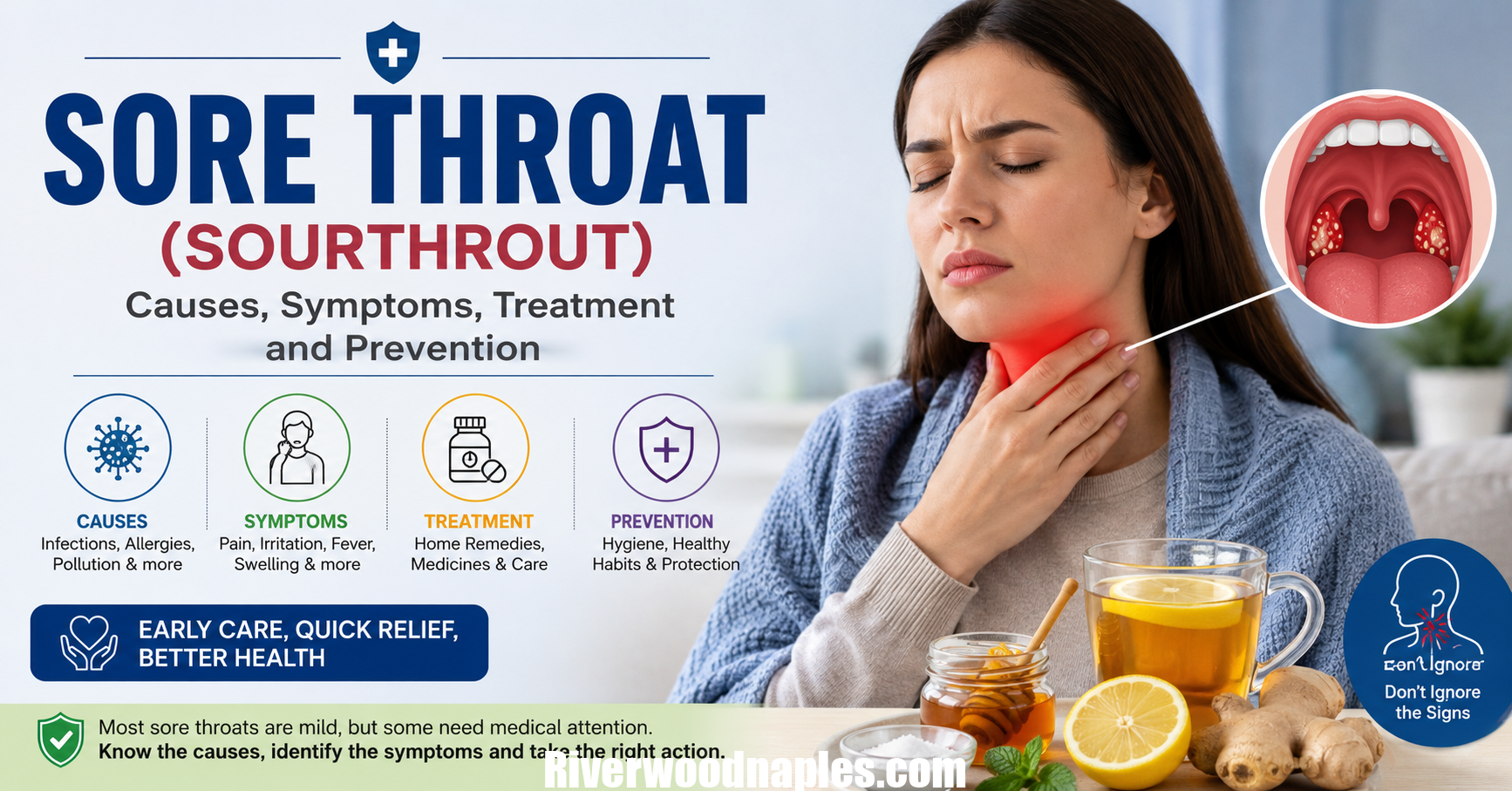
Sourthrout is a very common health problem that affects people of all ages. It causes pain, irritation, or scratchiness in the throat, which often worsens when swallowing, speaking, or eating. In most cases, it is a mild, temporary condition, but sometimes it can be a sign of an infection or other health issues.
A sore throat is not usually a disease itself, but a symptom of an underlying problem such as viral infections (like cold or flu), bacterial infections (like strep throat), allergies, or environmental factors like pollution and dry air. It can also occur due to excessive shouting, smoking, or acid reflux.
Understanding sore throat is important because it helps in managing symptoms properly and avoiding complications. Most cases recover within a few days with simple home care like warm fluids, salt water gargling, and rest. However, if the pain is severe, long-lasting, or comes with a high fever, medical attention may be needed.
Basic Anatomy of the Throat
To understand Sourthrout better, it is important to know how the throat is structured and how it functions in the human body.
Structure of the Throat
The throat, medically known as the pharynx, is a muscular tube that connects the nose and mouth to the esophagus and windpipe. It consists of three main parts:
- Nasopharynx: Upper part behind the nose
- Oropharynx: The middle part behind the mouth
- Laryngopharynx: Lower part that connects to the esophagus and larynx
In addition to the pharynx, other important structures include:
- Tonsils: Lymphatic tissues that help fight infection
- Larynx (voice box): Responsible for producing sound
Functions of the Throat
The throat plays a vital role in daily life:
- Helps in swallowing food and liquids
- Supports breathing by allowing airflow
- Enables speech and voice production
- Acts as a defense system against infections
Because it is exposed to air, food, and environmental particles, it is highly vulnerable to infections and irritation.
Causes of Sourthrout
A sore throat can be triggered by several factors. These causes are generally divided into infectious and non-infectious categories.
Viral Infections (Most Common Cause)
Around 70–90% of Sourthrout cases are caused by viruses. These infections are usually mild and resolve on their own.
Common viral causes include:
- Common cold viruses
- Influenza (flu)
- COVID-19
- Epstein-Barr virus (mononucleosis)
In viral infections, a sore throat is often accompanied by cough, runny nose, fatigue, and mild fever.
Bacterial Infections
Bacterial infections are less common but more severe than viral infections. The most well-known bacterial cause is Streptococcus pyogenes, responsible for strep throat.
Symptoms of bacterial sore throat often include:
- Severe throat pain
- High fever
- White patches on the tonsils
- Swollen lymph nodes
Unlike viral infections, bacterial infections often require antibiotic treatment.
Environmental Factors of Sourthrout
The environment plays a major role in throat irritation. Common triggers include:
- Air pollution
- Smoke (cigarettes or industrial)
- Dry air (especially in winter or air-conditioned rooms)
- Chemical fumes
These factors do not cause infection but irritate throat tissues, leading to discomfort.
Allergies
Allergic reactions can also cause a persistent sore throat. When the immune system reacts to allergens, inflammation occurs.
Common allergens include:
- Dust mites
- Pollen
- Mold
- Pet dander
Allergy-related Sourthrout is often accompanied by sneezing, watery eyes, and nasal congestion.
Lifestyle and Other Causes
Certain habits and conditions also contribute:
- Excessive talking or shouting
- Singing for long hours
- Acid reflux (GERD), where stomach acid irritates the throat
- Mouth breathing during sleep
Symptoms of Sourthrout
Symptoms vary depending on the cause and severity of the condition.
Common Symptoms
A sore throat usually starts with mild discomfort or irritation in the throat. People often feel a scratchy or dry sensation that gets worse while swallowing or talking. In many cases, there is also mild pain, hoarseness in the voice, and a constant urge to clear the throat. These symptoms are usually not severe and may improve within a few days with proper rest and hydration.
Infection-Related Symptoms
When Sourthrout is caused by an infection, especially viral or bacterial, additional symptoms may appear. These can include fever, swollen tonsils, red or inflamed throat, and swollen lymph nodes in the neck. In bacterial cases like strep throat, white patches may also be visible in the throat, along with more intense pain and difficulty swallowing.
Severe Warning Signs
In some cases, a sore throat can show serious warning signs that need medical attention. These include severe throat pain that makes swallowing or breathing difficult, high fever that does not go down, blood in saliva, or persistent symptoms lasting more than a week. If these symptoms appear, it may indicate a more serious infection or complication requiring immediate medical care.
Types of Sourthrout
| Category | Details |
| Definition | Pain, irritation, or scratchiness in the throat |
| Main Causes | Viral infections, bacterial infections, allergies, pollution, dry air |
| Common Symptoms | Throat pain, difficulty swallowing, fever, swollen tonsils |
| Viral Case | Most common, mild, usually heals in 5–7 days |
| Bacterial Case | More severe cases may need antibiotics |
| Home Remedies | Warm salt water gargle, honey, herbal tea, hydration |
| Prevention | Hygiene, avoid smoking, a healthy diet, and stay hydrated |
| When to See a Doctor | Severe pain, high fever, breathing difficulty, or symptoms for>7–10 days |
Diagnosis of Sore Throat
Doctors diagnose Sourthrout using several methods.
Physical Examination
- Checking redness and swelling in the throat
- Examining tonsils
- Feeling lymph nodes in the neck
Throat Swab Test
A sample is taken from the throat to check for bacterial infection.
Rapid Strep Test
Provides quick results to confirm strep throat.
Blood Tests
Used in complicated cases to detect viral infections like mononucleosis.
Treatment of Sourthrout
Treatment depends on the underlying cause.
Home Remedies
Most mild Sourthrout improve with simple care:
- A warm saltwater gargle reduces inflammation
- Honey mixed with warm water soothes irritation
- Herbal teas like ginger or chamomile help with healing
- Staying hydrated keeps the throat moist
- Resting the voice prevents strain
Over-the-Counter Medicines
- Pain relievers like paracetamol or ibuprofen
- Throat lozenges for temporary relief
- Sprays that numb throat pain
Medical Treatment
If bacterial infection is confirmed:
- Antibiotics are prescribed
- Treatment of underlying conditions (acid reflux or allergies)
- Anti-inflammatory medications if needed
Prevention of Sourthrout
Prevention is always better than treatment.
1. Hygiene Practices
- Wash your hands frequently
- Avoid close contact with infected individuals
- Do not share utensils or drinks
2. Healthy Lifestyle
- Avoid smoking and polluted environments
- Drink plenty of water
- Eat a balanced diet rich in vitamins
3. Environmental Protection for Sourthrout
- Use humidifiers in dry weather
- Avoid allergens like dust and pollen
- Keep indoor air clean
4. Immune System Support
- Regular exercise
- Adequate sleep
- Stress management
Complications of Untreated Sourthrout
If ignored, a sore throat may lead to:
- Spread of infection to the tonsils or sinuses
- Ear infections
- Abscess formation in the throat
- Rheumatic fever (rare but serious)
Early treatment reduces the risk of complications.
When to See a Doctor
Medical attention is necessary if:
- Symptoms last more than 7–10 days
- Severe pain or difficulty swallowing
- High fever that does not improve
- Breathing difficulties
- Recurrent Sourthrout episodes
Conclusion
A sore throat is a very common condition that affects millions of people worldwide. In most cases, it is mild and caused by viral infections or environmental irritation. However, understanding its symptoms, causes, and warning signs is important for proper care.
With simple home remedies, good hygiene, and a healthy lifestyle, most Sourthrout can be prevented or treated effectively. Persistent or severe cases should never be ignored, as they may indicate bacterial infection or other underlying health issues.
By taking timely action and maintaining throat health, individuals can reduce discomfort and prevent complications, ensuring better overall well-being
Disclaimer
The information provided in this article about Sore Throat (Sourthrout) is for general educational and informational purposes only. It is not intended to replace professional medical advice, diagnosis, or treatment. Always seek the advice of a qualified healthcare provider or physician if you have any questions regarding a medical condition or if you are experiencing severe or persistent symptoms. Never ignore professional medical advice or delay seeking it because of something you have read in this content.