

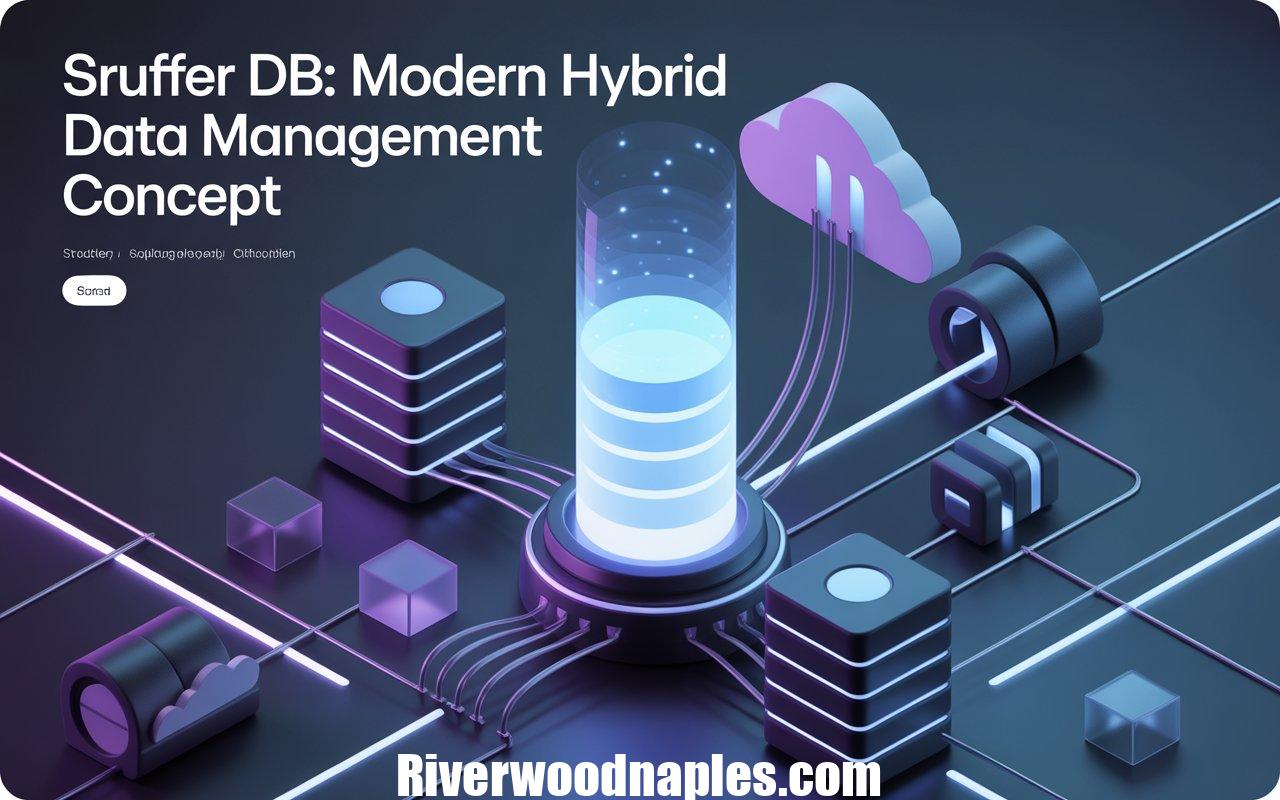
Sruffer DB is a next-generation hybrid database concept designed to handle modern data challenges in today’s digital economy. As organizations rely more on mobile apps, e-commerce platforms, IoT systems, and financial applications, traditional databases often struggle with scalability, speed, and real-time processing.
It is described as a unified approach that combines the strengths of relational databases, NoSQL systems, and real-time analytics engines into a single flexible architecture. Instead of being a fix or standardiz product, it is better understood as a modern database design philosophy focused on scalability, flexibility, and high-performance data processing.
Overall, it represents the shift toward adaptive, cloud-ready data systems that can efficiently manage structured, semi-structured, and unstructured data in real time.
What is Sruffer DB?
It can be define as a conceptual database framework that integrates multiple data handling approaches into one system. It aims to eliminate the traditional separation between structured and unstructured data processing.
In simple terms, it is design to:
- Handle structured data (tables, rows, columns)
- Manage semi-structured data (JSON, XML)
- Process unstructured data (logs, media, streaming events)
Unlike traditional SQL databases that require predefined schemas or NoSQL systems that often sacrifice consistency for flexibility, Sruffer DB attempts to balance both worlds.
It is often describe as a hybrid data management system that supports transactional processing and analytical workloads simultaneously.
Why Sruffer DB Matters in Modern Data Systems
Modern applications generate massive volumes of data every second. Social media platforms, e-commerce systems, financial services, and IoT devices all contribute to this exponential growth.
Traditional databases face several challenges:
- Rigid schema structures make adaptation slow
- Scaling requires complex infrastructure changes
- Real-time analytics often require separate systems
- Data fragmentation across multiple platforms
NoSQL systems improved flexibility but introduced their own limitations, such as inconsistent querying models and weaker transactional guarantees.
Sruffer DB is position as a response to these limitations. It reflects a broader industry shift toward:
- Unified data platforms
- Real-time analytics
- Cloud-native architectures
- Distributed computing systems
The core idea is simple: modern applications should not need multiple databases to perform different tasks.
Core Architecture of Sruffer DB
Although it is conceptual, its architecture is generally describe using modern distribute system principles.
Distributed System Design
Sruffer DB is built on a distribute architecture where data is spread across multiple nodes. This design improves:
- Fault tolerance
- System reliability
- Horizontal scalability
If one node fails, others continue processing data without interruption.
Hybrid Storage Engine
A key feature of it is its dual-layer storage model:
- In-memory storage for fast data access
- Disk-based storage for long-term persistence
This hybrid approach ensures that frequently access data is retrieve quickly while maintaining durability for large datasets.
Schema Flexibility Layer of Sruffer DB
Unlike traditional relational systems, Sruffer DB supports a flexible schema model. This means:
- Data structures can evolve over time
- New fields can be add without major migrations
- Applications can adapt quickly to changing requirements
This flexibility is especially useful for agile development environments.
Smart Indexing System
To maintain performance at scale, it relies on advanced indexing techniques. These systems:
- Optimize query execution paths
- Reduce data retrieval time
- Support real-time analytics workloads
Smart indexing ensures that performance remains consistent even as data volume increases.
Key Features of Sruffer DB
It is commonly associate with several modern database capabilities.
High Scalability
The system supports both vertical and horizontal scaling. This allows organizations to expand infrastructure as demand grows without major architectural changes.
Real-Time Data Processing
One of its defining features is real-time processing. Data is analyze instantly as it enters the system, making it suitable for dashboards, monitoring systems, and live analytics.
Multi-Format Data Handling
Sruffer DB is design to handle diverse data types:
- Structured records
- JSON documents
- Event streams
- Media metadata
This eliminates the need for multiple specialized databases.
Cloud-Native Compatibility of Sruffer DB
It is typically described as cloud-ready, meaning it can operate across:
- AWS
- Microsoft Azure
- Google Cloud
- Hybrid cloud environments
This flexibility is essential for modern enterprise systems.
How Sruffer DB Works (Conceptual Flow)
The internal workflow of it can be understood in four stages:
- Data Ingestion
Data enters the system from multiple sources such as applications, APIs, and IoT devices. - Data Distribution
The system distributes data across multiple nodes for processing and storage. - Query Processing
User requests are analyzed and routed through optimized query engines. - Real-Time Analytics Layer
Results are processed instantly and returned for dashboards or applications.
This flow ensures both speed and scalability.
Advantages of Sruffer DB
It offers several conceptual advantages:
- Reduces complexity in data architecture
- Eliminates need for multiple database systems
- Enhances application performance
- Supports real-time decision-making
- Adapts easily to modern cloud environments
These benefits make it attractive in discussions around next-generation data systems.
Limitations and Challenges
Despite its advantages, Sruffer DB also presents challenges:
- Learning curve for developers used to traditional SQL
- Lack of standardized implementation
- Complexity in large-scale configuration
- Migration risks from legacy systems
Because it is largely conceptual, real-world adoption may vary depending on implementation.
Use Cases of Sruffer DB
It is commonly associated with several high-demand industries:
E-Commerce Platforms
Used for real-time inventory tracking, customer analytics, and order processing.
IoT Systems
Handles continuous streams of sensor data from connected devices.
Financial Applications
Supports fraud detection, transaction monitoring, and risk analysis.
Healthcare Systems
Manages patient records, diagnostic data, and analytics workflows.
SaaS Applications
Enables multi-tenant architectures and scalable backend systems.
Sruffer DB vs Traditional Databases
| Feature | SQL Databases | NoSQL Databases | (Conceptual) |
| Schema Flexibility | Low | High | High |
| Real-Time Processing | Limited | Moderate | Strong |
| Scalability | Complex | Moderate | Built-in |
| Data Types | Structured | Semi-structured | All types |
| Architecture | Centralized | Distributed | Hybrid |
This comparison highlights why Sruffer DB is often discussed as a “bridge” between SQL and NoSQL systems.
Integration with Applications
Sruffer DB is typically described as easy to integrate through APIs and SDKs.
Common integration steps include:
- Creating a database instance
- Generating authentication keys
- Installing SDKs for programming languages
- Establishing secure connections
- Performing CRUD operations
This API-driven model allows developers to connect applications quickly without complex configuration.
Security Model of Sruffer DB
Security is a key component in modern data systems. It is often associated with:
- Encryption at multiple levels
- Access control policies
- Authentication mechanisms
- Continuous audit tracking
These features help ensure data protection in enterprise environments.
Performance Optimization Techniques
To maintain high performance, systems inspired by Sruffer DB use:
- Index tuning
- Data partitioning
- Load balancing
- Query caching
- Distributed processing optimization
These techniques ensure smooth operation under heavy workloads.
Future of Sruffer DB
The future of it, as a concept, is closely tied to evolving data technologies:
- AI-powered query optimization
- Predictive data modeling
- Fully automated scaling systems
- Deeper cloud-native integration
- Self-healing database architectures
As data complexity increases, such hybrid models are likely to become more relevant.
Conclusion
Sruffer DB represents a modern way of thinking about data management rather than a single defined product. It reflects the growing need for systems that combine flexibility, scalability, and real-time performance in a unified architecture.
While it is still largely conceptual, its principles align closely with the future direction of database technology. Organizations that understand and adopt these ideas early are better positioned to handle the increasing complexity of modern data systems.
In essence, it symbolizes the shift toward smarter, faster, and more unified data infrastructures—a direction that continues to shape the future of software development.