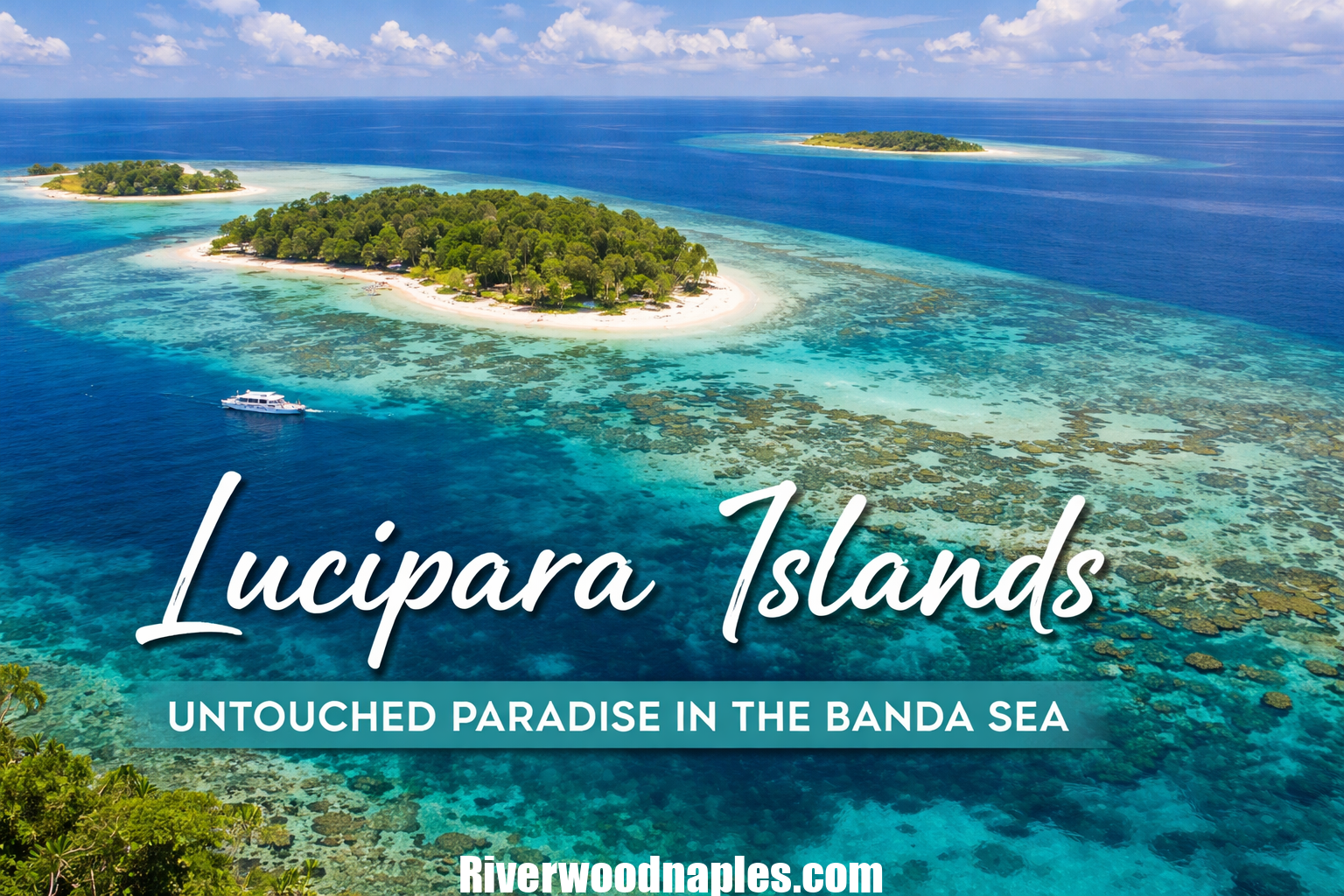
Lucipara: Indonesia’s Untouched Marine Paradise
The Lucipara Islands lie far from the crowds, nestled deep within the Banda Sea of eastern Indonesia. Remote, mysterious, and breathtakingly beautiful, this cluster of islands is one of the last remaining corners of Earth where marine ecosystems thrive with minimal human disturbance. Stretching across the vast expanse of blue ocean southeast of Ambon, the Islands have become known among scientists, adventurers, and dedicated eco‑travelers as a hidden marine sanctuary — a place where coral reefs flourish, turtles nest in significant numbers, and the rhythms of nature play out in all their unfiltered glory.
In a world where untouched environments are increasingly rare, the Islands stand as a testament to the resiliency and wonders of the natural world.
Geographic Location and Access of Lucipara
Where the Islands Lie
The Islands sit in the heart of the Banda Sea, one of the most remote parts of the Indonesian archipelago. Located roughly 200 kilometers south of Ambon Island, they occupy a central position in a network of seas, deep trenches, and coral plateaus that make the Banda Sea region a marine biodiversity hotspot. On nautical charts, the islands may appear as mere dots in a vast ocean — but those dots represent one of the richest underwater worlds on the planet.
The islands have been known by several names throughout history. These include Lousapara Islands, Lucapin Islands, Lucipara Eilanden, Lusipari Islands, and Pulau‑pulau. Whether these variations arose from colonial maps, local dialects, or maritime navigator lore, they all point to a cluster of landmasses little touched by modern development.
Access and Isolation
Reaching the Lucipara Islands is not like booking a flight to Bali or taking a ferry between popular tourist islands. Access is challenging and requires careful planning. From Ambon, the only feasible way to reach the islands is by boat. Skilled local captains navigate open ocean conditions, riding long swells and variable currents to make the roughly 15‑hour passage.
Crucially, these journeys are only possible during specific seasonal windows when the monsoon shifts and sea conditions become passable. Outside of these periods, rough seas make travel too dangerous for all but the most experienced mariners. This natural barrier has contributed significantly to the islands’ state of preservation. Unlike many coastal areas that have suffered from overfishing, development, and pollution, the Islands’ isolation has acted as an ecological shield — a buffer keeping human impacts at bay.
History and Human Presence of Lucipara
Early Settlement and Traditional Use
The Lucipara Islands do not have a long history of permanent settlement. For centuries, small groups of families from nearby regions — notably Ambon and other parts of Maluku — made occasional journeys to the islands. These communities were not settlers in the conventional sense; rather, they were seasonal harvesters, visiting to collect coconuts or other natural resources before returning to their home villages.
There was no sustained, year‑round community living on the islands. Instead, the land saw only intermittent human presence — people who respected the rhythms of nature more than they sought to dominate it.
Modern Visits and Expeditions
In more recent decades, the Islands have drawn the attention of marine scientists, conservationists, and specialized diving groups. A notable expedition occurred in 2019, when a small team of adventurers and researchers boarded a vessel bound for Lucipara and neighboring Penyu Island. These visitors were drawn by curiosity and a desire to document the reef systems, marine wildlife, and ecological conditions far from mainstream dive destinations.
Among the expedition members were marine scientists and specialists with years of experience in remote island ecosystems. Their observations provided valuable insights into coral health, fish populations, turtle nesting behavior, and the status of marine predators. The 2019 journey was a rare opportunity to capture first‑hand accounts of life above and below the waterline, creating narratives that would help shape understanding of the islands’ true ecological value.
Current Presence of Lucipara
Today, the islands remain uninhabited in any permanent sense. There are, however, scattered signs of human activity:
- Traditional coconut harvesters still visit occasionally to collect nuts or other forest products.
- Fishermen from Ambon and Wakatobi sometimes anchor offshore, cast their nets, and fish steep lagoon drop‑offs.
- A small group of government personnel may reside temporarily to manage and maintain navigational aids such as lighthouses — critical structures for maritime safety in these open waters.
These interactions are episodic and relatively low‑impact compared to the intense development seen in many coastal regions. Yet, even here, the footprints left by humans — fishing gear, trash, and disruption of habitats — remind visitors that no place, however remote, is completely free from human influence.
Marine Biodiversity of Lucipara
Coral Reef Structures and Habitat Diversity
One of the defining features of the Islands is the complexity and health of their coral reef systems. Unlike degraded reefs found near metropolitan coastal areas, Lucipara’s reefs remain vibrant and robust. They form an intricate underwater architecture made up of:
- Reef flats: broad, shallow expanses where sunlight penetrates easily, fostering massive coral growth and dense populations of reef fish.
- Reef crests: mid‑reef zones with dramatic coral shapes, sponges, and encrusting organisms.
- Steep drop‑offs: underwater walls that plunge into deep blue, offering habitat for large predators and migratory species.
These varied environments create niches for a stunning range of marine organisms, making a living tapestry of life.
Colorful Reef Fish Communities
Swimming among the coral are large schools of colorful reef fish that seem to dart effortlessly through their watery domain. Popular sightings include:
- Trevallies: sleek, powerful fish that hunt in coordinated schools.
- Barracudas: silver‑scaled speedsters cruising just above coral faces.
- Unicornfish: elegant reef grazers known for distinctive elongated snouts.
- Rainbow runners: fast, shimmering fish that flash like jewels in the sunlit water.
- Bluefin trevallies: social and energetic fish that patrol reef boundaries.
- Longnose emperors: curious and graceful species that play key roles in reef food webs.
- Bumphead parrotfish: massive, charismatic fish whose head bumps and powerful beak‑like jaws crush coral — a critical ecological role that shapes reef landscapes over time.
The diversity and abundance of these species indicate healthy trophic dynamics and low fishing pressure — an encouraging sign in an era when many reefs suffer from overexploitation.
Sharks and Mobile Predators of Lucipara
Sharks are often considered key indicators of reef health. In most places where shark populations have declined, it reflects a deep ecological imbalance. But around the Lucipara Islands, sightings of sharks are common and frequent.
Among those observed are:
- Blacktip reef sharks: often seen in shallow waters, curious and alert.
- White reef sharks: heavier, more solitary predators that patrol deeper channels.
- Juvenile grey reef sharks: bold young sharks that sometimes swim close to snorkelers, their curiosity outweighing caution.
These sightings hint at a balanced and productive marine environment, where apex predators still fulfill their natural roles without the suppression that decades of fishing pressure cause elsewhere.
Other Marine Wildlife on Lucipara
The richness of life around it doesn’t stop with fish and sharks. Reef flats and coral outcrops provide habitats for:
- Rays: gliding, graceful creatures that move like shadows over sandy patches.
- Octopuses: elusive cephalopods hiding among rocks and reef crevices.
- Lobsters: nocturnal crustaceans that take shelter beneath overturned coral heads and crevices.
Each of these adds depth to the ecological narrative, reminding observers that the reef is a multi‑layered world where countless species interact, feed, reproduce, and depend on one another.
Indicators of Reef Health
Several factors affirm that Lucipara’s marine ecosystems are healthier than many reefs elsewhere:
- High diversity of species at multiple trophic levels
- Large-sized structures and population density of reef builders
- Presence of large predatory fish
- Minimal signs of destructive fishing gear or reef damage
- Low incidence of coral bleaching or disease
Together, these paint a picture of an underwater world still functioning as nature intended — a marine environment in one of its most complete and vibrant forms.
Sea Turtles and Nesting of Lucipara
Species and Behavior
The Lucipara Islands are also a world‑class turtle habitat. Among the most frequently encountered species are:
- Green turtles (Chelonia mydas) are known for slow, deliberate movements and herbivorous grazing on seagrass and algae.
- Hawksbill turtles (Eretmochelys imbricata): smaller, more agile turtles with patterned shells, favoring reef edges and coral zones.
During extended snorkeling sessions around the islands, observers have recorded hundreds of turtles, with green turtles making up the majority. Their behavior ranges from slow underwater grazing to surface breezing — each sighting a reminder of ancient migratory paths that continue today.
Nesting Beaches and Trails on Lucipara
On sandy stretches above the high‑tide line, the islands’ beaches serve as nesting grounds for these endangered animals. Tracks carved in the sand mark the arduous journey of a female turtle as she hauls her massive body onto shore, digs a nest, and lays her clutch of eggs. Witnessing this process is both humbling and profound — a moment when ancient instinct overcomes fatigue, sand, and ocean winds.
Yet as remarkable as these nesting events are, they also spotlight environmental challenges. Even here, visitors have found marine debris scattered along the beach — plastics entangled in seaweed, discarded fishing lines, and other waste washed from distant places. In some locations, suspected nesting sites are choked with trash, making it harder for turtles to find suitable places to dig.
The Importance of Conservation
Protecting turtle nesting sites is not just about preserving one species — it’s about safeguarding an entire life cycle and ecological connection. Sea turtles play vital roles in marine ecosystems, from maintaining healthy seagrass beds to balancing food webs. Their presence around highlights the islands’ ecological significance and reinforces the need for intentional, long‑term conservation planning.
Conservation and Environmental Significance of Lucipara
Potential Marine Protected Area Status
Recognizing the ecological value of the Islands, Indonesian authorities have proposed designating the region as a marine protected area (MPA). Such a designation would provide legal protections, regulate fishing and tourism, and help prioritize scientific monitoring and habitat restoration.
An MPA would allow Lucipara’s ecosystems to continue thriving while giving local communities and researchers frameworks to manage resources responsibly and sustainably.
Current Environmental Challenges
Despite their isolation, the islands are not immune to environmental threats:
- Marine debris: Plastics and floating waste reach the islands via ocean currents, harming wildlife and complicating nesting efforts.
- Fishing pressure: Though limited, some fishing activity occurs near reef drop‑offs and in surrounding waters.
- Change in ocean conditions: Rising sea temperatures and ocean acidification pose future risks to coral resilience and species distribution.
Addressing these challenges requires collaborative effort — combining government policy, community engagement, scientific research, and sustainable tourism principles.
Importance of Indonesia’s Maritime Heritage
The Lucipara Islands are more than ecological treasures; they are part of Indonesia’s maritime heritage. Indonesia’s identity is intertwined with its seas — from historical spice routes to vibrant fishing cultures and ancestral navigation knowledge. Lucipara, largely untouched by mass tourism or commercial exploitation, embodies the essence of this heritage: deep respect for the ocean, knowledge passed across generations, and the marvel of biodiversity thriving in harmony.
Opportunities for Sustainable Tourism and Research
The islands represent a frontier for responsible eco‑tourism and marine research. Carefully managed tourism can offer economic benefits while promoting conservation values. Opportunities include:
- Guided snorkeling and diving expeditions
- Scientific research cruises and biodiversity documentation
- Volunteer programs for reef monitoring and turtle protection
- Cultural and educational outreach involving nearby coastal communities
When done responsibly, tourism becomes a force for preservation rather than degradation — a way to show the world what we stand to lose without concerted care.
Tourism and Visitor Experience of Lucipara
Who Can Visit?
The Islands are not a destination for casual vacationers. Access is best suited for:
- SCUBA divers seeking pristine reef walls and vibrant underwater life
- Marine researchers conducting ecological surveys and long‑term monitoring
- Eco‑tourists who want to experience wild nature with minimal infrastructure
These visitors must be prepared for expedition‑style travel, limited amenities, and conditions that are beautiful but rugged.
Unique Experiences on Lucipara
Visitors to this are rewarded with experiences unlike typical tropical island tourism:
- Snorkeling and diving in crystal‑clear water, surrounded by vibrant reefs
- Observing a kaleidoscope of marine life, from giant schools of fish to curious reef sharks
- Witnessing sea turtle nesting is a rare and moving spectacle of natural life cycles
- Disconnecting from digital noise, waking to sunrise, wind, and the sound of waves
These encounters are not mere check‑off activities — they are transformational moments that deepen appreciation for the natural world.
Practical Considerations for Travel
Preparing for an expedition requires attention to detail:
- Travel time: 15 hours by boat from the nearest departure point.
- Seasonal access: Trips are only feasible during specific months when sea conditions are favorable.
- Safety: Guides should be experienced, with knowledge of currents, first‑aid readiness, and emergency plans.
- Equipment: Reliable diving and snorkeling gear, reef‑safe sunscreen, and hydration supplies are essential.
Tour operators focusing on eco‑tourism emphasize respect for wildlife and ecosystems. Visitors are encouraged to follow guidelines that minimize human impact and preserve the islands’ beauty.
Responsible Tourism Principles
To protect Lucipara’s ecosystems, responsible practices must be observed:
- Avoid touching or standing on coral
- Never feed or chase wildlife
- Remove all trash and avoid single‑use plastics
- Respect turtle nesting sites and keep light sources low at night
- Support local guides and conservation initiatives
These principles help ensure that tourism sustains, rather than degrades, fragile habitats.
Notable Experiences and Observations
Snorkeling Highlights
Snorkeling around Lucipara reveals a world of vibrant life. On warm, shallow reef flats, sunlight sparkles on coral gardens teeming with schooling fish. Large expanses of reef allow explorers to drift over walls, watching reef structures undulate in soft currents.
The experience is immersive: patches of sea fans sway like underwater forests, clownfish dart among anemones, and parrotfish graze coral with methodical grace.
Memorable Wildlife Encounters on Lucipara
Among the most unforgettable moments are encounters with reef sharks, especially juvenile grey reef sharks that swim with a fearless curiosity. They circle inquisitively, sometimes approaching snorkeling visitors, their sleek silhouettes cutting elegantly through the blue.
Large schools of trevallies and rainbow runners mirror the sky’s hues, moving in synchrony and shimmering like living prisms in the sunlit water.
Witnessing Turtle Nesting
On moonlit beaches during nesting season, visitors may see female green turtles laboring through the sand — their flippers digging deep as they prepare nests high above the tide line. These moments are profound, silent, and filled with respect for life’s enduring rhythms.
Watching hatchlings emerge at night and begin their treacherous crawl to the sea is a reminder of nature’s fragility and the responsibilities humans carry as stewards of the planet.
Reflection on Resilience and Beauty
The Lucipara Islands teach a silent lesson about resilience. Despite climate pressures, ocean shifts, and distant human influence, this marine ecosystem endures. Its reefs remain vibrant, its waters rich, and its wilderness still speaks in colors, currents, and life.
Challenges and Threats
Human Impact Despite Remoteness
Even the most isolated places are not immune to human influence. Trash washing ashore, abandoned fishing lines, and occasional nets suggest that the reach of human activity extends far beyond populated shores.
Addressing this impact requires stronger monitoring and collective global effort.
Climate‑Related Threats
While Lucipara’s reefs show limited signs of bleaching today, climate change remains a looming threat. Rising sea temperatures, ocean acidification, and changing current patterns can stress coral systems, weaken resilience, and alter species distributions.
Long‑term monitoring is crucial to understanding how these changes might manifest here before they become irreversible.
The Need for Conservation Monitoring
Establishing research stations, funding ecological surveys, and training local partners are essential strategies for ongoing protection. Conservation monitoring can detect early signs of stress, guide intervention efforts, and ensure that Lucipara remains a thriving marine ecosystem for future generations.
Conclusion
The Islands are a rare natural jewel — one of the few remaining places where coral reefs, marine wildlife, and coastal systems continue to thrive with minimal human disturbance. From the elegant rhythm of reef fish to the ancient migrations of sea turtles, Lucipara embodies the resilience and complexity of marine life.
Understanding, protecting, and responsibly experiencing these islands is not merely an academic exercise — it is a global responsibility. As the world changes, it stands as a vibrant reminder of what intact ecosystems can be: beautiful, dynamic, and full of life.
Preserving such places requires vision, cooperation, and respect for nature’s intrinsic value. For scientists, divers, and eco‑travelers alike, the Islands are not just a destination — they are a living story of what the ocean can be, and what it must remain if future generations are to marvel at its wonder.