Lidarmos: Industries with LiDAR and Intelligent 3D Mapping
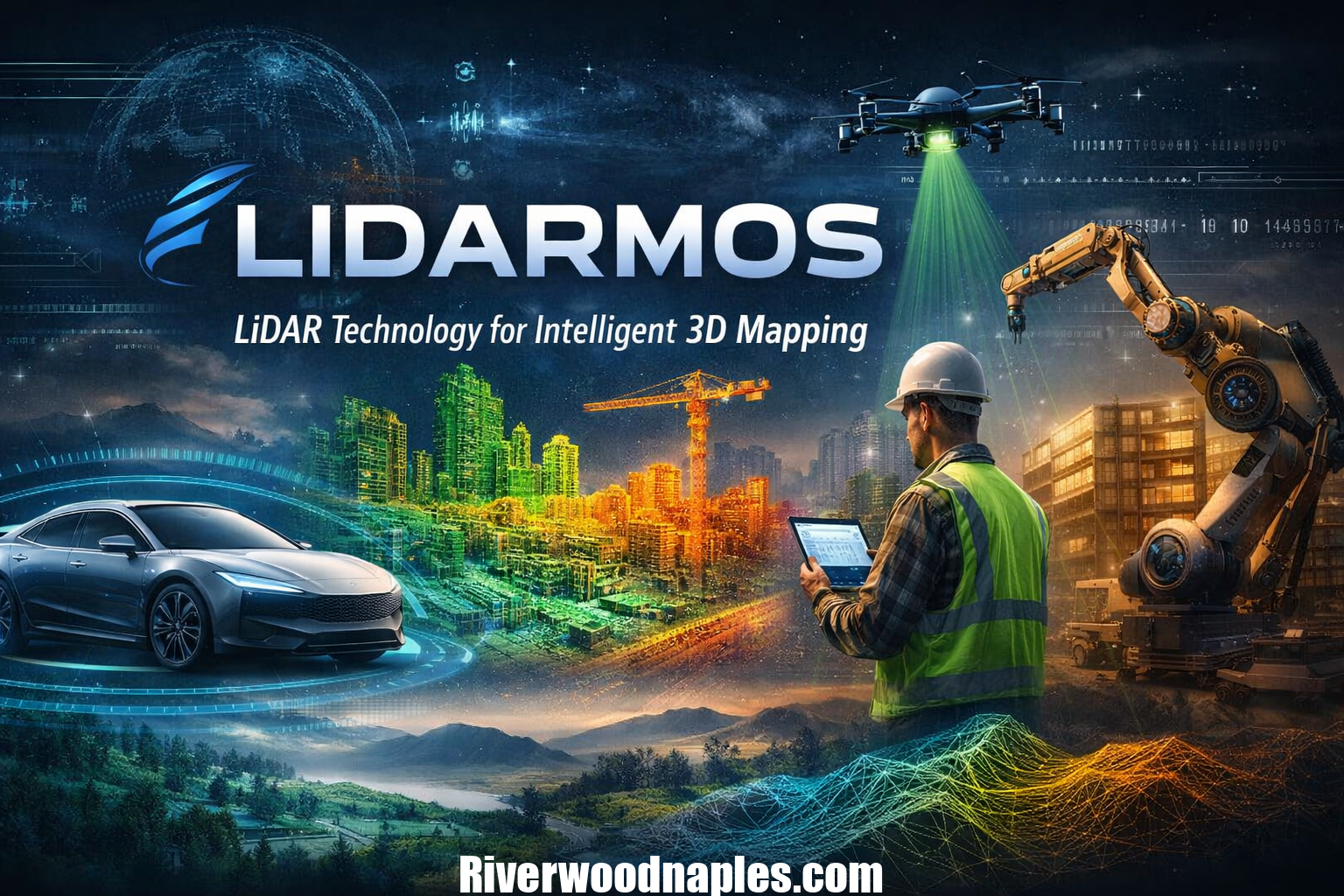
Lidarmos is revolutionizing industries in today’s fast-paced world, where precision, efficiency, and real-time data drive innovation. This breakthrough technology is a high-speed LiDAR (Light Detection and Ranging) system combined with artificial intelligence and automation, designed to provide actionable insights in real time. From autonomous vehicles to construction, robotics, and environmental research, it has become an essential tool that redefines how organizations perceive, analyze, and interact with their environment.
What Is Lidarmos?
At its core, it is a LiDAR-based scanning and mapping platform that captures detailed spatial data using laser pulses. Unlike traditional measurement tools, which often rely on cameras, rulers, or 2D scanning methods, it generates high-resolution 3D maps of the environment. These maps, often called digital twins, provide a complete and precise representation of any space, object, or surface.
Key Features of Lidarmos
- High-speed scanning: it emits thousands of laser pulses per second to capture data rapidly.
- Real-time 3D mapping: Data is processed immediately to create accurate, actionable 3D models.
- Environmental adaptability: Works indoors, outdoors, in low-light conditions, and on reflective surfaces.
- AI and automation integration: The system transforms raw LiDAR data into intelligent insights for automated processes.
- Digital twin creation: Provides a virtual replica of physical spaces for analysis, planning, and monitoring.
The combination of LiDAR technology with AI allows Lidarmos to perform tasks that were previously impossible or extremely time-consuming, making it a game-changer for industries that rely on spatial accuracy and operational efficiency.
How Lidarmos Works
Understanding the mechanics of it helps illustrate why it is so revolutionary. At its core, it operates through three essential steps:
Laser Pulse Emission
Lidarmos devices emit thousands of laser pulses per second. These pulses travel outward until they hit an object or surface.
Pulse Reflection and Measurement
Each laser pulse reflects off the device. The system calculates the distance between the scanner and the object based on the time it takes for the pulse to return. This method is highly precise and allows the system to account for depth, shape, and spatial orientation.
Data Processing and 3D Mapping in Lidarmos
The collected data points, also known as point clouds, are processed by AI algorithms. The system distinguishes between static and moving objects, calculates precise angles, and constructs high-resolution 3D models. These models can then be used for monitoring, decision-making, or integration into BIM (Building Information Modeling) software.
By combining real-time scanning, AI processing, and automation, it allows businesses and machines to perceive and respond to their environment with “superhuman vision.”
Simplifying the Concept of Lidarmos
To make the concept approachable, consider it as a machine’s superhuman eye. It can see with precision regardless of environmental conditions — whether it’s a dusty factory floor, an outdoor construction site, or a dimly lit warehouse. While humans rely on limited perception influenced by light and perspective, Lidarmos uses physics and laser technology to ensure consistent, reliable observation.
This ability is crucial for industries where small errors can lead to high costs or safety risks. For instance:
- Autonomous vehicles rely on accurate detection of pedestrians, vehicles, and obstacles.
- Construction workers use precise 3D models to prevent structural misalignments.
- Robotics requires spatial awareness to navigate unstructured environments safely.
Lidarmos ensures that these operations are not only possible but optimized for accuracy, speed, and reliability.
Industries Benefiting from Lidarmos
It is versatile and has a profound impact across multiple industries. Its ability to create real-time digital twins allows businesses to analyze, plan, and act with unprecedented precision.
Construction and Architecture
Traditional surveying methods are labor-intensive, time-consuming, and prone to human error. Lidarmos empowers architects, engineers, and construction professionals to:
- Scan entire sites within minutes
- Generate accurate 3D models for planning and monitoring
- Detect structural misalignments early in the process
- Simulate construction scenarios digitally before physical execution
Advantages in Construction:
- Precise terrain maps for planning
- Early detection of potential structural problems
- Measurement of complex or irregular shapes
- Reduced manual labor and project delays
- Enhanced design and renovation through digital twins
Autonomous Vehicles and Smart Mobility of Lidarmos
Autonomous cars require high-fidelity environmental mapping to navigate safely. It allows vehicles to detect:
- Other vehicles and pedestrians
- Road obstacles
- Lane boundaries and traffic patterns
Unlike cameras, Lidarmos performs reliably in low-light conditions or glare, ensuring safety and efficiency in diverse driving scenarios.
Robotics
Robotic systems depend on spatial awareness to operate in dynamic and unstructured environments. Lidarmos provides:
- Real-time mapping and obstacle detection
- Predictive insights for automated decision-making
- Accurate navigation in warehouses, factories, and outdoor sites
Environmental Research
Researchers use Lidarmos to:
- Map terrain and ecosystems
- Track wildlife movement
- Monitor environmental changes over time
The ability to rapidly gather and process spatial data makes it invaluable in studies where precision and repeatability are essential.
Key Advantages of Lidarmos
High Precision
It captures nuances in surfaces that traditional tools and human perception cannot. This high level of detail ensures accuracy in complex environments, reducing errors in critical operations.
Operational Efficiency
Automation of measurements saves time and labor costs. Projects can move forward without delays, as data is captured and processed in real time.
Safety of Lidarmos
Real-time awareness of surroundings allows machines and humans to react instantly to obstacles or environmental changes, minimizing accidents.
Cost Reduction
Accurate data prevents rework, reduces waste, and streamlines processes — leading to substantial financial savings.
Environmental Adaptability
It operates effectively across indoor and outdoor conditions, including low-light, dusty, or reflective environments.
Lidarmos vs Traditional Tools
Compared to cameras, 2D scanners, and manual surveying instruments, Lidarmos offers:
| Feature | Lidarmos vs Traditional Tools |
| 3D Spatial Data | Full 3D data (Cameras & 2D scanners limited) |
| Point Cloud Density | High-density modeling |
| Environmental Adaptability | Works in any light, indoor/outdoor, reflective surfaces |
| Actionable Insights | Real-time insights |
| Depth Perception | Accurate and precise |
| Real-Time Awareness | Immediate environmental understanding |
While cameras struggle with depth, and 2D scanners miss spatial details, it provides comprehensive, real-time environmental awareness.
Hidden Strengths of Lidarmos
Its advanced AI and processing capabilities enable:
- Multi-agent tracking in dynamic environments
- Predictive analytics for autonomous operations
- Reliable performance in complex, non-stationary conditions
- Integration with industrial automation systems for real-time decision-making
These strengths make Lidarmos a robust solution for industrial, commercial, and research applications.
Limitations and Common Misunderstandings
Some misconceptions exist regarding Lidarmos:
- It’s not limited to large-scale outdoor applications — it performs well indoors and at short ranges.
- Concerns about reflective or glossy surfaces are addressed in modern systems through advanced calibration.
- Many perceived limitations arise from incorrect setup or unrealistic expectations, not the technology itself.
The Future of Lidarmos
As industries embrace automation, AI, and data-driven decision-making, Lidarmos is poised to become a central technology. Future developments will focus on:
- Lighter, faster, and more integrated devices
- Improved real-time analytics and predictive modeling
- Enhanced adoption in smart cities, logistics, robotics, and autonomous systems
Early adopters will gain competitive advantages through faster workflows, safer operations, and improved efficiency.
Choosing the Right System
Selecting a system depends on:
- Scanning range required for the industry or project
- Environmental conditions (light, dust, reflections)
- Accuracy and resolution needs
- Data processing speed and software compatibility
- Durability and maintenance considerations
Choosing the right system ensures reliable performance and maximum ROI.
Conclusion
Lidarmos represents a paradigm shift in how industries perceive, interact with, and manage their environments. Its high-speed LiDAR scanning, AI-powered processing, and real-time mapping create a superhuman vision for machines, transforming operations across multiple sectors.
Whether in construction, robotics, autonomous mobility, or environmental research, it empowers organizations to work smarter, safer, and more efficiently. In an era where precision and data-driven decision-making define success, it is no longer optional — it’s essential.
By integrating speed, intelligence, and reliability, Lidarmos continues to reshape the future of industries, setting a new benchmark for operational excellence and innovation.